Use the map below to find a thermal drone pilot in Texas

Search with your location or zip code. Use the 150 mile option. Don't see a pilot nearby? We may still be able to help. Text 740-334-4099 with your zip code, and we'll see if we can connect you with a pilot manually. If you are interested in joining our drone pilot network, click here.

Lost Your Pet? We Can Help

The more time that passes, the harder the search becomes. We want to use every tool we have available to help locate your pet and bring them home. Even if we are not able to find your pet, we can offer peace of mind by reasonably ruling out areas where they could be.
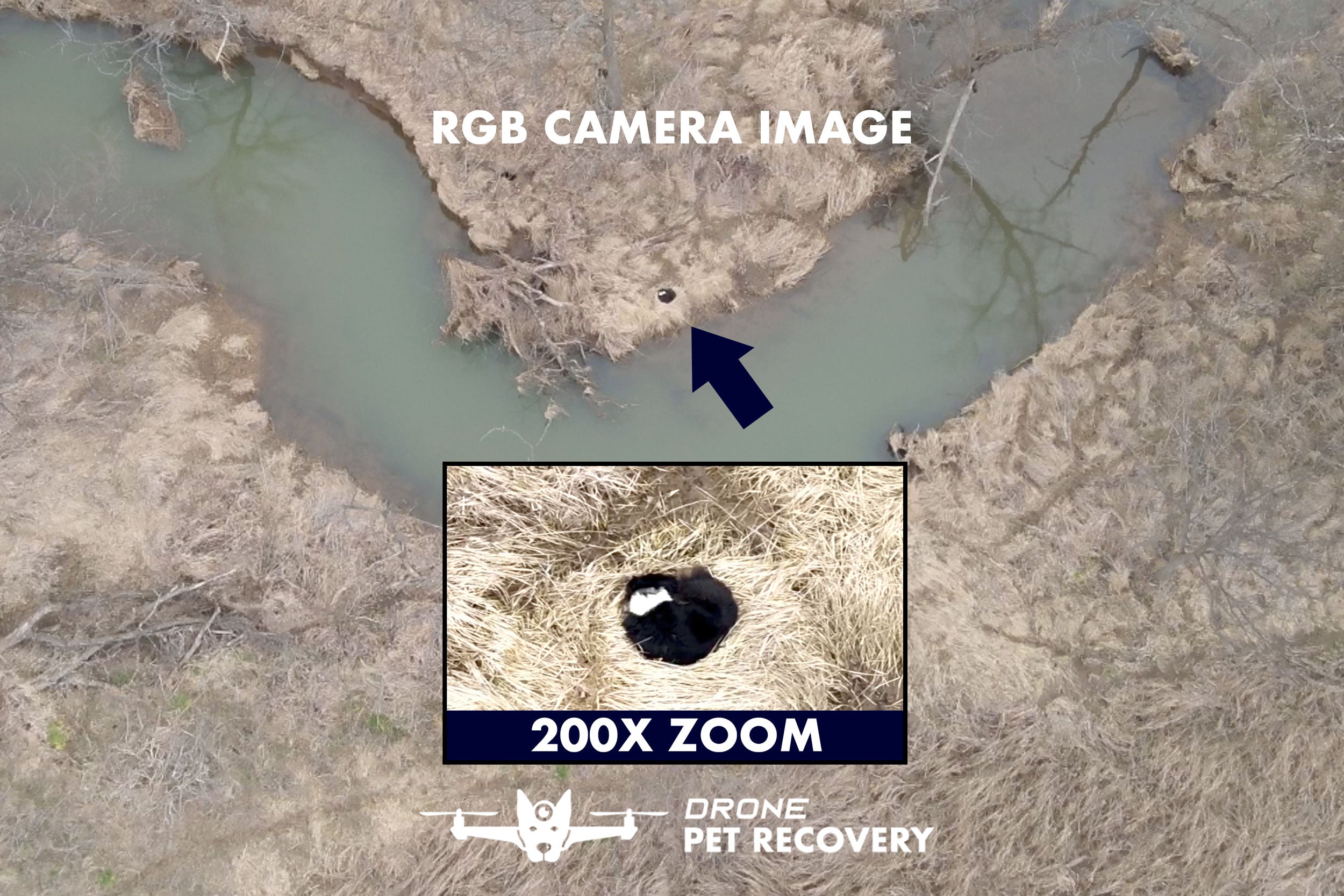
RGB Camera Image
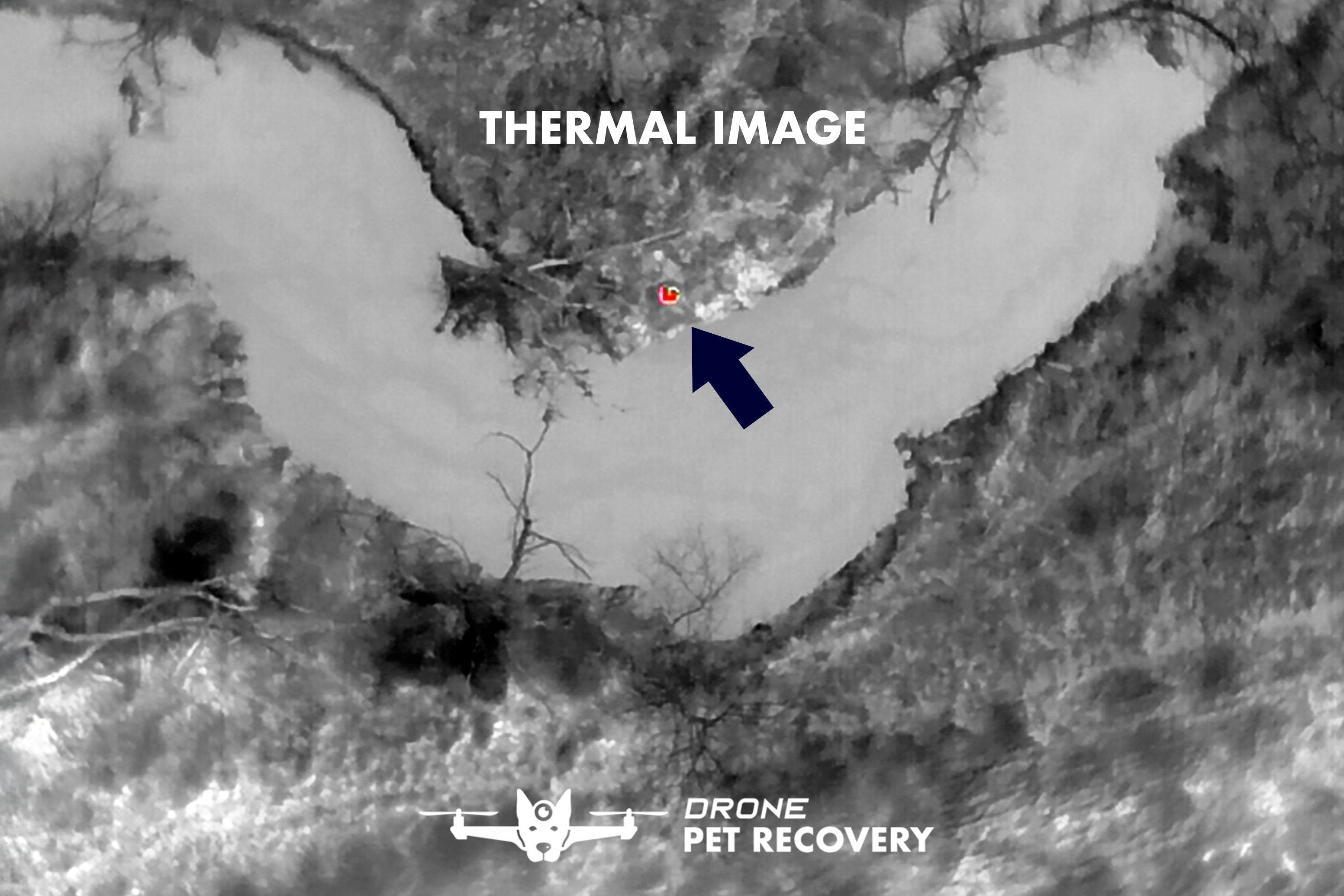
Thermal Image

How Thermal Drone Works

Thermal Signature

We fly over the landscape looking for a thermal signature contrast against the rest of the environment

RGB Camera

We then switch to an RGB (normal) camera to see what the thermal signature might be.

200x Zoom Camera

Our drone's 200x zoom camera allows us to zoom in to confirm that we have found your pet and allow us to track if needed.

  • Step 1: Call & Plan

    We will talk you through your situation to determine if our services make sense for your unique circumstances.

    We will want to know more about your pet. What kind? How big? How old? How long has it been missing or time since last sighting? Has s/he ever been lost before? Temperament?

    We will want to know the terrain of your area. Is it rural, hilly, wooded, overgrown, open fields, etc.

  • Step 2: Setup & Search

    We will make a plan based on the information you give us and we will begin as soon as we have established the search perimeter.

    We set up our launch pad, charging station, viewing station and landing pad light at a high point near the search area.

    You can see how the technology works on our 24″ mobile TV viewing station. As we identify heat signatures, you can help us determine whether we have found our target.

  • Step 3: Recovery

    If we are successful in locating your missing pet, we will do what we can to aid you in the recovery process. Our drone can keep the pet in sight as efforts are made to bring them home.

    We will provide onsite support with our drone to keep eyes on your pet. We try to help as much as possible with the recovery of your pet

    For large animals such as livestock, we highly recommend that you have additional people or resources at your disposal to help capture the animal. Our primary service is in helping you find your animal.

1 of 3

First Steps When You've Lost Your Pet

  • Take a deep breath, you are not alone. There's many folks out there who are ready and willing to help you find your lost pet.
  • Put out some food for them and maybe an article of clothing or a blanket that has your scent.
  • Post some photos and detailed information about your pet on local social media lost pet pages.
  • Place "Lost Dog" signs near intersections with your contact information.
  • Check with your local shelters daily and leave your contact info with them.
  • Check back at home periodically- sometimes pets do find their way back home!

FAQs

Common questions about Drone Pet Recovery

What is a thermal drone and how does it help find lost pets?

A thermal drone uses a special infrared camera to detect heat signatures. When we fly over an area, the drone identifies warm bodies (like your dog or cat) against cooler surroundings, making it easier to spot animals that may be hiding or moving through the landscape.

When is the best time to use a thermal drone to find a pet?

The most effective times are during cool, overcast weather, especially from late fall through early spring. These conditions create strong contrast between your pet’s body heat and the environment. Early mornings and evenings can also work well. Summertime searches are highly limited in effectiveness.

Can you still search for a pet in the summer?

Yes, but it’s quite a bit more challenging. Summer heat and leafy trees can reduce visibility and thermal contrast. We look for early mornings, overcast days, or rural nighttime opportunities. But not all situations will be ideal. Heavily wooded areas will be ineffective in most cases.

How do I know if a drone search will work for my pet?

We ask key questions before starting any search, including:

  • How long has your pet been missing
  • What kind of pet and how large?
  • Where were they last seen?
  • What's the local terrain and weather like?

We’ll give you an honest answer, even if that means recommending against a drone search.

How long does a typical search take?

Drone searches can last up to about 2 hours. This allows us to cover a large area efficiently. In some cases, we may extend the search or recommend returning at a better time. Each individual situation will vary.

What kinds of animals can you search for?

We primarily search for dogs, but we’ve also helped recover other animals like livestock and deer for hunters.

Can a thermal drone find a cat?

Cats can be harder to locate because they often like to hide in enclosed or sheltered spaces such as decks and porch floors. However, if a cat is moving through open terrain, laying down, or near the edge of a wooded area, we’ve had successful recoveries. See our video on cat search expectations for more detail.

What if my pet is inside a building or under thick tree cover?

Thermal drones cannot see through buildings, walls, or dense evergreen trees. However, we can help eliminate open areas, which allows you to focus on checking nearby sheds, garages, and structures.

More about TX...

Texas’s vast ranchlands, dense woods, and sprawling cities can make ground searches overwhelming. Our certified pilots use advanced thermal drones to scan miles of terrain quickly and safely. Whether your pet slipped away in a rural pasture or a busy neighborhood, our technology helps locate heat signatures fast and gives families a better chance at reunion.

Known as The Lone Star State, Texas embodies independence and grit. From the Hill Country’s rolling landscapes to Houston’s urban energy and the wide plains of West Texas, this state covers more ground than most nations. Texans value community and action—two principles that guide every flight we make. Our pilots bring local experience and top-tier equipment to searches across Texas, serving families with heart and precision.

State Website: https://www.texas.gov

Areas we serve in TX...

We serve all counties in Texas, including Anderson County (Palestine), Andrews County (Andrews), Angelina County (Lufkin), Aransas County (Rockport), Archer County (Archer City), Armstrong County (Claude), Atascosa County (Jourdanton), Austin County (Bellville), Bailey County (Muleshoe), Bandera County (Bandera), Bastrop County (Bastrop), Baylor County (Seymour), Bee County (Beeville), Bell County (Belton), Bexar County (San Antonio), Blanco County (Johnson City), Borden County (Gail), Bosque County (Meridian), Bowie County (New Boston), Brazoria County (Angleton), Brazos County (Bryan), Brewster County (Alpine), Briscoe County (Silverton), Brooks County (Falfurrias), Brown County (Brownwood), Burleson County (Caldwell), Burnet County (Burnet), Caldwell County (Lockhart), Calhoun County (Port Lavaca), Callahan County (Baird), Cameron County (Brownsville), Camp County (Pittsburg), Carson County (Panhandle), Cass County (Linden), Castro County (Dimmitt), Chambers County (Anahuac), Cherokee County (Rusk), Childress County (Childress), Clay County (Henrietta), Cochran County (Morton), Coke County (Robert Lee), Coleman County (Coleman), Collin County (McKinney), Collingsworth County (Wellington), Colorado County (Columbus), Comal County (New Braunfels), Comanche County (Comanche), Concho County (Paint Rock), Cooke County (Gainesville), Coryell County (Gatesville), Cottle County (Paducah), Crane County (Crane), Crockett County (Ozona), Crosby County (Crosbyton), Culberson County (Van Horn), Dallam County (Dalhart), Dallas County (Dallas), Dawson County (Lamesa), DeWitt County (Cuero), Deaf Smith County (Hereford), Delta County (Cooper), Denton County (Denton), Dickens County (Dickens), Dimmit County (Carrizo Springs), Donley County (Clarendon), Duval County (San Diego), Eastland County (Eastland), Ector County (Odessa), Edwards County (Rocksprings), El Paso County (El Paso), Ellis County (Waxahachie), Erath County (Stephenville), Falls County (Marlin), Fannin County (Bonham), Fayette County (La Grange), Fisher County (Roby), Floyd County (Floydada), Foard County (Crowell), Fort Bend County (Richmond), Franklin County (Mount Vernon), Freestone County (Fairfield), Frio County (Pearsall) — and continuing across all 254 counties in the Lone Star State, from Gaines County (Seminole) to Zavala County (Crystal City).